Tuesday, 27 March 2018

Which takes priority - the law or morality?


Can a crime ever be justified? Can an illegal act ever be a morally correct one? That is a question that can arise in many circumstances, and here are a few that might be worth pondering.


The gentleman thief

There have been many accounts written about highwaymen of old who behaved with every courtesy towards their victims as they robbed them. Women were not  harmed or abused in any way and the victims were only robbed of money and goods that they were unlikely to miss for long, being extremely wealthy in the first place. This was supposed to be the case with Dick Turpin, although an error by one particular author (the 19th century novelist William Harrison Ainsworth) confused Turpin with another highwayman from an earlier time.

However, the point was that it was possible to be both a thief and a gentleman – but was the act of theft, however considerately carried out, justifiable in any way from a moral perspective? Most people would probably say No.


Robin Hood

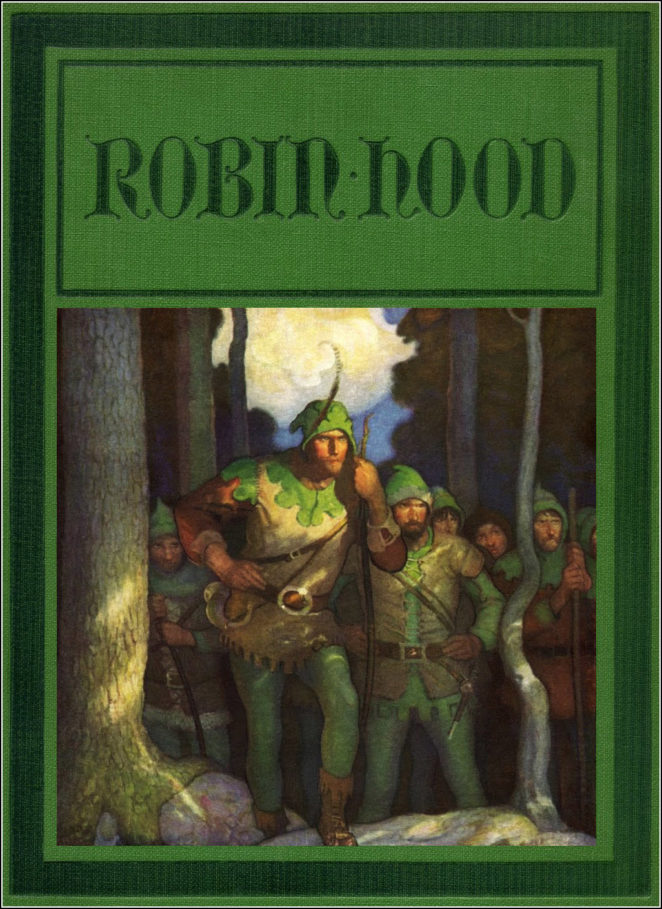
Stories about Robin Hood – which may have a modicum of truth about them, but are almost certainly fictional in most respects – tell of a leader of a gang of outlaws who “robbed the rich to give to the poor”. That is in itself a moral dilemma – is the crime justifiable if the criminal is not the chief beneficiary? Is it more justifiable if the victim can easily afford the loss?

What about if the victim had taken the money from the poor in the first place? That is the theme of many of the Robin Hood stories – the wicked Sherriff of Nottingham taxing poor people to the hilt on the orders of even more wicked Prince John, then Robin Hood waylaying the bullion carts and returning the cash to the peasants. Where does the moral judgment fall under these circumstances?
(An added factor in this story, which is rarely discussed, is that the reason for the heavy taxation was the need to raise money to pay the "king's ransom" - John's brother, King Richard, could only be freed from his captivity in Austria if a huge sum of money was paid, and that was where the bullion raided by Robin Hood and his companions was destined to go. The irony is that the outlaws claimed to be fighting on behalf of King Richard, whose release they were unwittingly causing to be delayed!)
The same dilemma presents itself in the TV comedy drama Hustle – a team of con-artists devise complicated scams to deprive rich people of their cash, but only when those people have obtained their wealth by dubious means in the first place. The hustlers always make sure that people who have been swindled by their “marks” are paid back every penny they have lost, although we must also assume that this is how our heroes make their living, so their motives are mixed.

Is it immoral to right a wrong if you have to break the law in order to do so?


Grenfell Tower

On 14th June 2017 a 24-storey residential tower block in North Kensington, London, was gutted by fire. 80 people were killed and more than 250 people were made homeless. The block was occupied by people at the lower end of the social scale, but the block was managed by an agency of the wealthiest borough in the whole of the United Kingdom, namely Kensington and Chelsea.

Within the borough there are many examples of properties, some worth millions of pounds, that are owned by extremely wealthy people – many of them based abroad – who treat their property portfolio purely as an investment. They do not live in their Kensington apartments, neither do they rent them out.

In other words, many families who lived in Grenfell Tower had to be accommodated in single hotel rooms on a bed-and-breakfast basis while – only a mile or so away – any number of perfectly serviceable flats lay completely empty.

Some people have suggested that these empty flats should have been requisitioned and handed over to former residents of Grenfell Tower. That would be illegal, because it would violate the ownership rights of the Russian oligarchs and others whose names are on the title deeds, but would it be the right thing to do from a moral perspective?

On the face of it, requisitioning these properties would sound like the obvious thing to do. Here you have people who have lost everything they have, through absolutely no fault of their own, being forced into grossly inadequate accommodation. They could be rehoused on a temporary basis very easily if the council was prepared to break the law. I find it hard to see that there is any moral dilemma here at all – taking over the oligarchs’ flats sounds like a no-brainer of an idea – but it simply didn’t happen, because the wealthy councilors of Kensington, whose penny-pinching policies contributed to the fire disaster in the first place, were scared stiff of being sued by the even wealthier chums of Vladimir Putin, whose purchases of London properties are often a thinly-veiled way of laundering the proceeds of their own crimes.

What chance does morality have when it is countered by big money? Very little!

What do you think? Is there not a good case for acting contrary to the law of the land when to do so would be morally correct? Or is it better to always play safe and stick to the rules?

© John Welford

What is a night watchman in cricket?


A night watchman is a lower-order batsman who comes to the crease instead of a higher-order batsman should a wicket fall close to the end of a day’s play during a three, four or five day cricket match.

It is common practice for a batting side to bat in approximate order of quality in terms of the players’ ability to score runs. The opening batsmen tend to be specialists who are good at fending off the bowling side’s opening fast bowlers, while the batsmen at positions three to six are expected to score the bulk of the runs. At the end of the list come the side’s bowlers who are not in the team because of their batting skills and are not expected to make large individual scores. Night watchmen tend to come from their ranks.

However, despite their relatively greater skill as run scorers, the fact remains that every specialist batsman is vulnerable at the start of his innings. A new batsman, once he has arrived at the crease and taken his guard, has to adjust to a number of factors, such as the condition of the light, the state and pace of the pitch, and how the bowlers are performing in terms of their pace and how they are moving or spinning the ball (depending on the type of bowler they are). It pays to be careful before beginning the task of scoring runs, because it is all too easy to be caught unawares before a batsman has got his timing right; the process of getting used to the conditions is called “playing oneself in”. However, should the bowler produce a really good delivery that does something unexpected before the batsman knows what to expect, the result could be disastrous from the batsman’s point of view.

A look at the scorecard for virtually any cricket match will show that it is not uncommon for at least one top batsman to make a low score, having been dismissed during the “playing in” period. In the circumstance mentioned above, when a wicket falls late in the day, a new batsman will have to go through two such periods, one during the last few overs before the close and, should he survive, another at the start of the following day. Given the added risk of dismissal at such times, it would be preferable, from the team’s point of view, for a run scorer to be protected from having to make two starts to his innings.

Hence there is a need for night watchmen. If a lower-order batsman is thought to be capable of protecting his wicket for the last few overs of the day, it is worth promoting him up the order even if he falls cheaply when play resumes the following day. The batsman who would have appeared the previous day can then start his innings at a reasonable hour of the day, only have to play himself in once, and have every chance of making a decent score. The night watchman’s wicket is therefore a sacrifice worth making.

It sometimes happens that the night watchman only has to face a small number of deliveries, or even none at all. This is possible if the other batsman on the field, who is presumably one of the better batsmen in the side, is able to “farm” the bowling by scoring a single run at the end of every over and therefore being the recipient of the bowling at the start of the next one. The night watchman’s job is therefore to back up his playing partner by running up the pitch when required and not getting himself (or the other batsman) run out!

The choice of who acts as night watchman is an important one. His main function is to defend, so he must be able to do that, and not every lower-batsman can do so reliably. However, if there is a player in the team who is almost impossible to get out if they are minded to stay put, then they are quite likely to get the job. A good defender will be very watchful and quick to react if the unexpected happens. He will have a natural awareness of which balls are safe to leave and which must be met with a dead bat. He will not be tempted to make rash strokes at balls that seem to offer scoring opportunities.

However, should he succeed in his role and still be batting when the next day’s play begins, the night watchman’s job is to put up or shut up, or, in other words, either to score some quick runs or get out and make way for the batsman who was being protected on the previous day. The worst thing that a night watchman can do is continue to defend and thus block up an end that could be occupied by someone who is a lot better at making scoring shots. It does sometimes happen that a night watchman makes a decent score, but this is usually when he gets lucky and hits some shots that beat the fielders before making the mistake that costs him his wicket. The more usual outcome is that the player gets bowled or offers a catch soon after he starts batting in a way that does not match his talents.

Sometimes the tactic of using a night watchman goes wrong and the lower-order batsman does not survive until the end of the day’s play. The captain of the batting side then has the problem of deciding who should take his place; should it be the original batsman or a second night watchman? The circumstances of the match will probably decide the issue, but it is a tricky one to make. That said, cricket is a game that is all about balancing risks and opportunities, and it is impossible to get such decisions right every time.

At least the concept of the night watchman gives a cricketing side an extra option when a particular situation presents itself. Whether the taking of that option proves to be wise or otherwise is often decided by the cricketing gods who seem to have a huge influence on this fascinating sport.

© John Welford

Toeing the line: two possible explanations


The instruction to “toe the line” is given when somebody is threatening to “step out of line” and behave in a way that breaks the rules. But where does the phrase originate? There are British and American accounts that offer an explanation, but - as one might expect – the American one can be discounted as complete nonsense!

The American version

According to the US Navy, toeing the line has to do with an old shipboard tradition. This refers to the lines on board a ship’s wooden deck that marked where one plank abutted another. In order to make the cracks between the planks watertight they would be packed with “oakum” (old rope that had been picked apart and the fibres beaten into a solid dense mass) then sealed with tar and pitch. The deck would thus appear to have a number of dead straight dark lines on it.

The custom on board ship was for groups of sailors to parade on deck and assemble in a particular area. The front rank would have their toes just touching one of the dark lines. Also, a naval punishment was for the miscreant to stand motionless for a long period of time with their toes just touching a line – in other words, toeing the line.

The British version

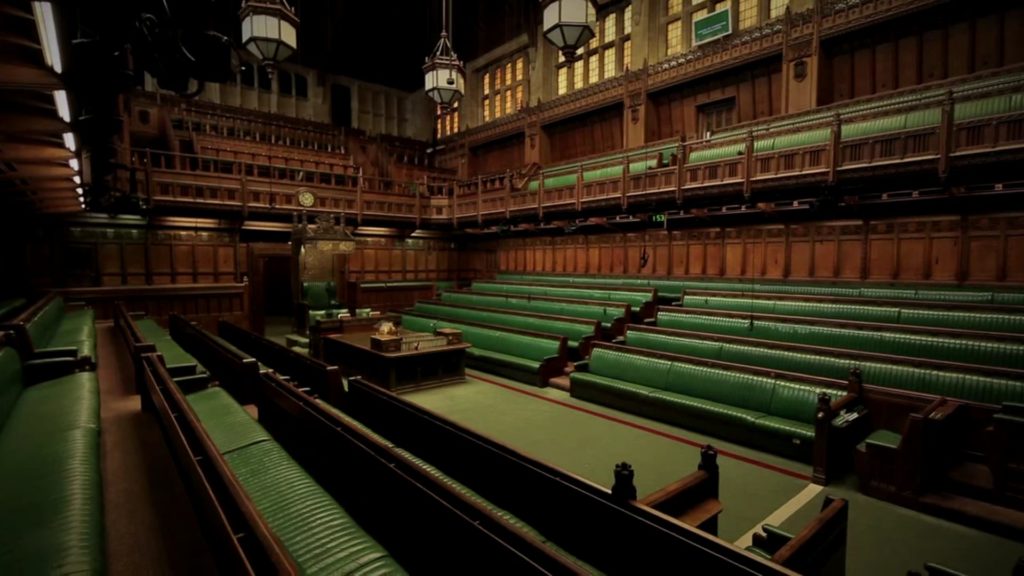
The relates to a strange feature of the House of Commons (the lower of the two Houses of Parliament). The Members sit facing each other, with the government benches to the right of the Speaker’s chair and the Opposition benches to the left. For most of the length of the chamber there is only an open floor that separates the two sides, so a Member of Parliament could – if so inclined – walk across the chamber and physically assault someone with whom he or she disagreed.

In past times, it was not unknown for Members to carry swords with them, so steps were taken to ensure that swordfights could not break out across the floor of the chamber. What Parliament’s managers did was to paint two red lines along the length of the floor, one in front of each front bench. It was reckoned that if you did not cross the line, your sword could not reach a sword wielded by someone who was standing behind the opposite line.

You can think what you like about the logic behind the assumption that somebody who was angry enough to draw their sword in the House of Commons would be restrained by a red line on the floor, but that is what was done.

The authority of the Speaker has always been paramount in the House, so if he called on someone to “toe the line”, thus keeping the whole of the foot behind it, they would do so without question.

Nobody these days carries a sword with them, but the red lines are still there on the floor. (As it happens, the coat hooks in the Members’ cloakroom have an extra loop that is there for the express purpose of allowing Members to hang their swords on them before proceeding to the chamber!) It is still customary for Members to stand behind the line when addressing the House, so it does have a function to perform even now.

So there you have it – I’ll go for the British version of the phrase’s origin every time!

© John Welford

Threatened by your menu?


The English language can be a dangerous weapon when it gets into the wrong hands! This is nowhere more evident than in the world of catering, where restaurant menus that make perfect sense in their native language are translated for the benefit of their English-speaking customers.

Many years ago a work colleague told me that she had been alarmed at being offered “Cheese threatened by ham”. 

I have been on the lookout for similar mistranslations ever since, and here are a few that seem to be in a similar vein (although not seen by me personally):

  • Fried chicken babies, fungus cream and grill cattle bowels
  • Chicken Gordon blue, pork shops, eggs scrambling
  • Buttered saucepans and fried hormones
  • Fried milk, children sandwiches, roast cattle and boiled sheep
  • Steamed fillet of new zeal and orange roughy
  • Chopped cow with a wire through it
  • Dreaded veal cutlet with potatoes in dream
  • Pork with fresh garbage

Then there was the Chinese takeaway I drove past in Worcestershire that declared that it offered China Meals to Take Away – you could see what they meant, but it just didn’t sound quite right!

© John Welford

Monday, 26 March 2018

The rise and fall of Received Pronunciation


For many years, especially during the late 19th century and the 20th century up to about 1980 or so, there was a “right” way and a “wrong” way to speak English. At least, this was what many “educated” people believed, particularly those living in south-east England. The “Received Pronunciation” of English was exported to the Empire via civil servants who had been to the best English schools, and it was reinforced when the BBC began broadcasting to the nation and the Empire, recruiting announcers and others whose voices fitted a standard that became known as “BBC English”.

Received Pronunciation (or RP) is therefore English without an appreciable regional accent and which abides by certain stylistic rules. It is therefore a standardised form of English. But how did it come about?

It was very largely a social phenomenon, in that people who had been educated to a certain level tended to consider themselves superior to those who had not. This generally meant a split along class lines, with the upper and middle classes forming the educated echelon and the working class being the semi-literate underclass whose communication was almost exclusively with others of their own class who spoke in the same way that they did. They also tended not to travel much, so they had no need to adapt their speech to suit the needs of anyone from outside their region.

The Education Act of 1870 threw open many of the great schools of the country, such as Eton, Harrow and Winchester, to the general public, which is why they are still known as “public schools”, although the term is confusing to American readers because it does not equate to “free”. Indeed, it was only the better-off members of the middle class who could afford the fees. However, for those who were able to attend these schools, and the “preparatory” schools that prepared boys (and it was mostly boys, not girls) for the exams that would gain them entry to the senior schools, a cultural clash took place between the sons of the aristocracy and the “nouveau riche” social climbers of the middle class.

Before this change, it was quite normal for upper class people to speak with regional accents. Gladstone and Peel, for example, despite their Eton/Harrow and Oxford University educations, never lost their Northern English accents. However, from about 1890 onwards it became a stigma to have a regional accent, and schoolmasters who had themselves been through the new educational mill passed on their prejudices to their middle class pupils.

The social climbers also appreciated the advantage of copying the manners and accents of those above them in the social hierarchy, and so Received Pronunciation was born. It spread via the Army and the colonial service throughout the Empire and therefore became a symbol of authority for those who used it. You were unlikely to gain advancement, whether British or “native”, if your accent did not match that of those with the power to make or break you in career terms.

When the BBC began broadcasting in 1921, its recruits came from the same educated middle class that had been either to public schools or the new tranche of “grammar schools” that in many ways sought to imitate the public schools. There were strenuous efforts to standardise broadcast speech, including a committee that decided how certain words were to be pronounced on the BBC. The early BBC form of RP sounds to a modern ear to be almost comical, with its “far back” renditions of words and phrases. If you can imagine “rolling stones” pronounced as “railing stains” you will get a good idea!

However, RP has had a much worse press in more recent years. It is now regarded by many as symptomatic of elitism and snobbery, and it is noticeable how few “far back” voices you will hear today, even among people who have no regional accent. A good example is Her Majesty the Queen, of whom many recordings exist of broadcasts made when she was much younger, such as during the 1950s. Half a century later, although she is still clearly an aristocrat in her speech, there are none of the knife-sharp edges to her vowels that typified RP.

The decline of RP has also had much to do with social attitudes towards people from the regions beyond the south-east of England. It is no longer acceptable for talented people to be denied careers in broadcasting just because of the way they speak, thus many newsreaders and reporters heard today have regional accents from throughout the United Kingdom and beyond.

It is no longer the case that “getting on” depends on conforming to a given pattern of behaviour, whether in speech or anything else. Received Pronunciation has, fortunately, become a thing of the past in our more accepting society.


© John Welford

The POSH myth debunked


The word “posh” can be defined as “elegant” or “luxurious” or it can be used to describe someone who is either “upper class” or behaves as though they are. But where does the word come from?

For many years people believed that it was an acronym, with the letters standing for Port Out Starboard Home. This in turn was supposed to derive from the custom of the Peninsular and Oriental Steamship Company (P&O) of issuing tickets to some of their customers that allowed them to have cabins on the port side of the ship (left-hand side in layman’s terms) on the voyage from Britain to India (or beyond) and on the starboard (right-hand side) on the return trip.

The advantage of this would have been that the cabins would be on the shady side of the ship in both directions, and this was preferable during the hottest parts of the voyage beyond the Suez Canal. The company would be able to charge extra for guaranteeing this privilege, so people who could afford “POSH” tickets would therefore be “posh” people!

This is a very neat explanation of how the word came into general use, but there is a fatal flaw with it – it simply isn’t true! The P&O Company have always denied that tickets were issued on this basis and nobody has ever produced a ticket that has POSH printed on it.

This is therefore yet another example of a popular myth that has gained currency because enough people have believed it to be true and have gleefully passed it on to others.

So where did the word come from? Nobody can be absolutely certain, but a possibility is that it derives from 19th century London street slang for money. The word “posh” occurs in Romany patois, meaning “half”, which was applied to a halfpenny. It may well have gained extra “value” down the years and come to be applied to money in general and not just small sums of it.

Naturally enough, people with lots of money tended to be of a higher social class than those with less of it, so the application of “posh” to the holders of plenty of “posh” is one that is not difficult to imagine.

Maybe well-to-do and aristocratic people sailing off to run the British Empire did ask to have cabins on the shady side of the ship, but if they did that is not what made them “posh”!

© John Welford

The origin of the term Mickey Finn


With any luck, nobody has ever slipped you a “Mickey Finn”. This is what can happen to victims who find that the bar drink they are consuming is having much more effect on them than it should have. Contaminating someone’s drink is a familiar move by unscrupulous people whose motive is robbery or possibly “date rape”.

But where does the name come from? Was there ever a real Mickey Finn? Indeed there was!

Michael Finn, generally known as Mickey, ran the Palm Garden Restaurant and Lone Star Saloon in downtown Chicago around the turn of the 19th/20th centuries.

However, Finn was more interested in fleecing his customers for what he could get than he was in merely selling them food and drink. He acted like a latter-day Fagin in that he trained a gang of crooks in the arts of pocket-picking and petty theft, and one of his favourite tricks was to lace a customer’s drink with chloral hydrate (more familiarly known as knock-out drops) and then dump the motionless victim somewhere in the city after relieving them of all their valuables.

Tracing the crimes back to Mickey Finn was not difficult, and his two establishments were shut down in 1903. He must either have had very good lawyers or friends in high places – possibly both – because he did not go to jail. Even more amazingly, a local bar owner gave him a job working behind the bar, and he was happy to sell his supposedly secret recipe to anyone who was willing to pay his price.

Packets of “Mickey Finn” powder were therefore widely circulated and the name stuck. The practice of contaminating drinks is still prevalent and has been used to commit a huge number of crimes down the years, both of robbery and sexual assault.

It is unlikely that Mickey Finn was the first person to use this method, but it is his name that will always be attached to it.

© John Welford